Sunday, August 30, 2009

When Given Free Cubs Tickets....

you go! Mom and Dad graciously watched the children so Glen and I could spend the day at Wrigley Field. The sun was shining, the breeze, chilly and the game, disappointing. But we enjoyed it!
At the field
See - not a book. A scorecard. And, I filled it out. Just ask Glen.

Look at that beautiful sun!
Oh, and Fukudome at bat.
By the way, I now know he plays center field.
Aren't you proud?
Glen: "I have to admit, I am glad I wore jeans."
I wrote it down on my scorecard.
I even took a picture.
Glen is never chilly.
Honestly, I enjoy going to Wrigley and watching the Cubs.
I was just jealous of those who were sitting in the sun.
I was wishing I had worn my long underwear.
To a baseball game. In Chicago. In August.
Global warming anyone?
A very chilly and expensive place to play video games.
There were four of them, sitting all in a row.
Guess the other two left to find a warmer place to play.

Harry Carey. A legend.

We took the Wrigley Express.
Not fighting traffic in the city. Priceless.
We finally found the sun! On the bus!

Tuesday, August 25, 2009

Keep Reading

I was at the beach yesterday afternoon, taking advantage of every last good day of the summer. My kids (except Isaac) were swimming, and I was sitting in my camp chair reading. Gotta love the beach!

I pulled out of my beach bag, the Summer Catalog from Memoria Press, a classical education resource. It has articles in every catalog, which I enjoy reading.

The one that caught my eye was Stop Cleaning the Kitchen and Read a Book by Susan Wise Bauer. Well, that's a philosophy with which I can agree wholeheartedly! You can read the whole article here.

It is really an excellent article. While written for the homeschooling mother, I think the principles apply to everyone. It also made me realize that I tend to read too fast (I am a speed reader), and I tend not to reread books unless they're absolute favorites. I am also guilty of reading fairly easy books. I have not ever, for instance, read Les Mis or Crime and Punishment or much Shakespeare for that matter.

Recently, in fact, I find myself blazing through books as quickly as I can so I can write a blog post on them. Even when I want to find time to contemplate them, ponder them, discuss them with my friends or husband, I haven't because I've been too busy reading.

While I'm not ready to start on Anna Karenina tomorrow, I will start a reading journal. And I have started reading through a book off my shelf a little each morning - He Gave Us Stories: The Bible Student's Guide to Interpreting Old Testament Narratives. It's not a classic, but it is academic.

And since it's my book, I can write in it.

Friday, August 21, 2009

Meet Me in St. Louis, Louis...

At the Future Leader's Reception at City Museum

Friday Night dinner at Union Station

Lisa and Beth

Me with my good friend Harriet

Me with my Shaklee sister, Shawna

Me with Kristi
We all have fun at convention!

Earlier this month, I went to St. Louis with some colleagues (including Beth above) for the annual Shaklee convention. It's a nice break from the day-to-day mom and teacher stuff, but it was more of a working vacation. Lots of sitting and lots of learning - as with any convention. But fortunately, there's still plenty of time to hang out and have fun.

As I was going through my pictures, I realized one of my favorite things about convention is reconnecting with my Shaklee friends, and meeting new ones. The trip down was fun - carpooling with Beth and John. I can't tell you how excited I was to see my friend Harriet again. And spend time with Shawna and Kristi. And meet so many fun people like Lisa, Kristi W, Ginny, Pat, Andrea, Christy and Carolyn. Most of them I had 'met' over the phone - what fun to put faces with the voices, hang out with them, and learn from them.

I would have never met any of these people if I hadn't been in Shaklee. And my life is richer because of it. Thanks Shaklee!

Monday, August 17, 2009

The 3 Big Questions for a Frantic Family


I happened to be browsing the shelves of our library when this book caught my eye. I thought it looked interesting - do you know a family which isn't frantic? - and picked it up.

The 3 Big Questions for a Frantic Family is a great book for any family which feels overwhelmed to read. Patrick Lencioni writes in a very readable fashion - it doesn't take much time and it sticks with you.

The book is in the form of a fable, following a frantic family who decides to adapt some business principles to their family life. It goes quickly through the business principles, and follows the couple who decide they need to make it simpler and easier for families to follow.

They come up with three big questions for families to answer.

First: What makes our family unique?

Second: What is your family's top priority - rallying cry - right now?

Third: How do you talk about and use the answers to these questions?

The whole process to answer these questions shouldn't take more than an hour. To prepare for the process, you should probably read this book, or at least the last few chapters of the book to get context for the questions and come up with ways that your family can answer the questions. But reading the last few chapters and reviewing some real life examples shouldn't take more than a few hours at most if you're a slow reader.

Call it an investment in your family. In the book, Lencioni calls it context. A framework from which your family can operate and make decisions. It's easier to say no to things when you know what the top priority is for your family in the next few months. It's easier to know what to say yes to when you have that same knowledge.

The genius of this book is not only answering the first two questions, but the inclusion of the third. It's too easy to set aside something we've worked on in the bustle of day-to-day life. The answer to the third question gives accountability to actually take action on the top priority - and an easy way to measure areas which are going well, and those which need work. I love his idea of using colors to mark progress in accomplishing the top priority.

And when there's purpose to life, then life becomes more meaningful and deliberate than what's the next urgent thing which needs my attention? And that makes all the difference.

Wednesday, August 12, 2009

Princess Academy

My seven-year-old daughter brought me the audio book of Princess Academy this week when we were in the library. I'd never heard of it, but she told me her friend had told her that it was a really good book. Her friend is in junior high, so I thought I'd better read the book before listening to it with all the kids.

Princess Academy is a much quicker read than Inkheart, but that does not mean it is not good. In fact, I like Princess Academy much better than Inkheart.

The basic story line is that the girls from a mountain village are forced to go to an academy for an entire year to learn to be a princess because the priests in the capital said that the prince's wife will come from this village.

The girls do not read or write, most work in the mines. The story revolves around Miri, a young girl who's mother died when she was young. Miri's father does not allow her to work in the mines, which makes her feel useless. The academy comes, and she is forced to go.

Along the way, Miri learns the importance of education and reading, she learns how much she loves her village and really doesn't want to leave to be a wealthy princess. She learns to apply the lessons she's learned in the academy (the scene where she applies the Principles of Diplomacy is wonderful!), and learns a secret form of communicating she thought was only available to quarry workers.

Princess Academy is a wonderful, engaging story with great lessons for young girls - and boys (if you can get them to listen in or read it. There is plenty of adventure to keep them interested). I would recommend it for older elementary or junior high students. Miri talks about her feelings for her childhood friend and her conflict over wanting to be with him or be the princess with the beautiful dresses and houses. Good things to think about for older girls - I think my girls are a bit too young to be thinking about those topics.

In a few more years, we'll listen to this audio book as a family. I know we'll all enjoy it.

Tuesday, August 11, 2009

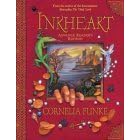
Inkheart

My kids have seen the advertisements for the movie Inkheart and have begged to watch it. The rule in our house is that I need to see a movie before they can watch it (well, as much as possible). I didn't feel like watching a movie, and noticed the book at our library, so I picked it up since the books are usually better than the movie.

Inkheart is a very long book. I enjoyed reading it very much, but I don't think my kids are ready to listen to the book or watch the movie. I was immediately pulled in to the story of the book, wondering what the mystery was, what the secret was, why Meg and her father Mo were hiding.

And I was scared. Inkheart is a very scary book. Perhaps it is scarier than the movie - I've not seen it - because of the images I create in my imagination. My children scare easily, and I do not plan on reading this book to them. I think my 11-year-old son would enjoy reading this book on his own, but not for several years.

One thing I really enjoyed about Inkheart are the little excerpts at the beginning of each chapter. They're taken from many different children's books, some of which I wasn't familiar. They set the emotional tone for the chapter and in some cases, revealed the inspiration of the events of the chapter.

The premise is that Mo can read characters and things out of books he reads aloud. He didn't realize he had this gift until one night he read an evil character out of a book, and his wife (Meg's mother) went into the book. This causes all sorts of problems, and in the course of the story, Meg realizes she has the same gift. The ending feels a long time coming, but is very creative.

Overall, Inkheart is a good, but scary book. I'd recommend it for an older reader who can handle scary books.

Tuesday, August 04, 2009

48 Days to the Work You Love

I heard a very short snippet of an interview with Dan Miller on the radio last month, and it was enough for me to search out his book 48 Days to the Work You Love. I felt I needed a new perspective on work, and some guiding questions to help me evaluate my professional life.

In 48 Days to the Work You Love, Miller provides just that. He discusses the definition of work - and our culture's perspective of work. I especially enjoyed his discussion of the differences between vocation, career, and job.

After the more philosophical, yet very readable, discussions of work, Miller moves into very practical applications of finding work. He gives tips and samples of resumes, introduction letters, follow up letters. He talks about the interview and what an applicant can and should do to prepare for it. He takes us through a step-by-step job search process not focused on the classifieds (in print or online) and destroys myths we believe about the job search process.

He also has a couple of chapters on starting your own business - what to think about, answering common questions, and giving words of warning about scams. He encourages us to stretch our thinking - and to do something with our ideas.
"Most great business ideas are not new and revolutionary. They are simple but done by someone who just did something! A good idea will not put money in anybody's pocket, but combined with a plan of action that good idea can give you time control and unlimited income."

Dave Ramsey (of Total Money Makeover fame) sets the tone for Miller's book in his forward. He says, "The difference between successful and the troubled is not error-free living; it is that by discovering and implementing a life calling, the successful stand on their pile of trash while the troubled sit under theirs. ... This is a book about implementation, so do it!"

I would recommend this book to anyone feeling discouraged, disappointed, or is searching for a job. Putting into practice a few of the things in this book will help you climb to the top of your trash pile, instead of sitting under it.

Sunday, August 02, 2009

A Day for Dreams Fulfilled

Papa and Nana (my parents) plan a very special trip with their grandchildren on very special birthdays. For the boys, it's a trip to the Lego store when they turn 10 (a rather arbitrary number that happened because Nathaniel, their oldest grandson, turned 10 shortly before Anna, their oldest granddaughter, turned 8).

Eight is a very magical number for girls because that is the day they are officially old enough (by package labeling) to own an American Girl Doll. I'm fortunate that it was my mother's dream for her granddaughters to own and enjoy at least one American Girl doll. Because otherwise, they wouldn't.

It just so happened that 2009 is the magical year that two of their granddaughters turn eight, within six weeks of each other. So, they planned their trip (poor Papa!) for downtown Chicago and the American Girl Doll store.

This is what I imagined their day would be like. Nana (and Papa) enduring while two little girls squealed and hugged and generally expressed their unparalleled enthusiasm for such a trip. I cannot believe Papa caught this moment on the CTA bus.
Mom says it was really quite enjoyable. I mentioned to her that my friend asked if we were going to see pictures chronicling this big day in the lives of Priscilla and Lydia. Mom says she glad I did, because she remembered to take pictures. The only picture we're missing is the one of Priscilla curled up in a chair in her daddy's office downtown, feeling too sick to move. Lydia decided that they should give Priscilla the morning to see if she could feel better so their trip wouldn't have to be canceled. Papa and Nana took her to Millenium Park. She was a trooper - she walked many "thousand-millions" of steps (as Isaac put it) that morning. And they got some cool pictures.
After patiently waiting (I'm sure it felt like eons!), they went to the restaurant and there was Priscilla - back to her normal, chipper self! Lunch, and ice cream, with Papa, Nana, Uncle Troy & Aunt Carrie at the Frango Cafe in Macy's. Wait. Why wasn't I invited?

Then, finally, mecca. The American Girl Doll Store!


As if the day couldn't be any more special, Papa & Nana invited Lydia to spend the night that night.Elizabeth (Felicity's friend) has not left her side since then. She behaved very well, according to Lydia, during her first church service and Sunday School class. But she had to stay home and take a nap when we went to the beach this afternoon.

Wednesday, July 29, 2009

Say ya to da UP, eh?

My dad grew up in 'da UP, eh?' of Michigan. Every summer when I was a child, we'd pack our bags and head north for a week with Grandpa and Grandma. I have fond memories of riding their bikes all over their small town - getting ice cream at the local convinence store, candy at the local grocery, hours at the beach in the water, and sliding down the huge metal slide in the school playground across the street.

Amazingly enough, we've been able to take our children north nearly every summer of their lives - even when we lived in Florida. Now my children have wonderful memories of their own of the little town in Michigan - even though their great-grandparents have both passed away. So, when we announced we were going to the UP this summer, they were excited. One thing we have recently added to our trips are 'adventures' (thanks to my sister - Aunt Carrie).

We, along with my parents, camped out at Great-Grandma's house (haven't sold it yet, but most of the furniture is gone), so there's always work to be done.


All work and no play makes any vacation dull. Dad insisted on taking the kids to the go-carts. They were hesitant at first, but one ride later, they were all convinced it was a great idea. Isaac's already asking to go back when he's eight and he can drive one himself.


Our adventure this time was a trip to Munising and the Pictured Rocks. It was very foggy, but we had a fun time. Well, Lydia & Isaac faded out at our first stop - but perked up after they ate lunch.


Now that Pat & Jim's has closed, we have to walk up to the Dairy-Flo for our ice cream (it's across the street, behind Mom and me in the picture).

One favorite stop is the library - across the street, inside the school. They love that they can go themselves and read. A taste of independence!

Besides the beach, bike rides are a daily event. The kids especially liked riding on the boardwalk.


I think I have a picture of the kids on the front steps from every trip we've taken. I should pull them out and create a collage...


Posted by Picasa

Monday, July 27, 2009

A Sad Farewell

I love my AirSource 3000.  When someone asks me what my favorite Shaklee product is, usually the AirSource tops the list.  It has made a huge difference in my allergies – so much so that I took it with me to my grandmother’s house in upper Michigan last week on vacation. 


It’s helped so much that my mother bought one for her basement.  Before the AirSource, I could not go down to change a load of laundry without having an allergy attack.  Now, Mom’s basement is not a problem.


It’s helped so much I would take it with me to my mother-in-law’s house so I could sleep in her basement.  She bought an AirSource after I brought it enough times that she noticed a difference when it was there.  My father-in-law loves it too.


Needless to say, I am very sad to say that Shaklee is saying farewell to the AirSource 3000.  There are a number of reasons for this decision, one of which is new legislation taking effect this fall in California (Shaklee’s headquartered there), requiring all air filtration units to be registered with the state.  Shaklee’s decided the process of registration is too cumbersome and expensive for it to undertake, so it is taking it off the market.


The good news is that there is still time to buy an AirSource.  And I would highly, highly recommend that you do.  The AirSource will last for many, many years (some say up to 20 or more).  The photohydroionization modules need to be changed only once a year, and will continue to be available for three more years.  This allows us all time to stock up on the modules before they’re no longer available.


Why would I recommend you purchase a product which is going off the market?  I’ve had my AirSource for about eight years.  Eight years of helping me manage my allergies.  Eight years of limiting the spread of germs and viruses in our house.  Eight years of killing mold and mildew.  Eight years of neutralizing the toxins in the air in my house.  Eight years of breathing fresh air even in the middle of winter.


It’s been worth every single penny I spent on it.  Just ask my husband – he’d tell you the same thing.


I encourage you – dare I say implore you – to buy an AirSource now, before they go off the market.  Buy it for your health, the health of your loved ones.


If you have an AirSource, remember to start stocking up on the modules.  Also, become a fan of my business, Healthy Homes, on facebook, and share your AirSource story on the Discussion page.  I look forward to reading your stories!

Tuesday, July 21, 2009

Columbine

I am not one to be fascinated by huge news events, which is ironic considering my degree in Broadcast Journalism and my brief years in the field. However, I found myself picking up the book Columbine by Dave Cullen at my library.

It took me awhile to get around to reading it. I had planned on returning it to the library without reading it as I wasn't sure I wanted to read about such a disturbing event. But I did pick it up the night before we left for vacation, since I had packed all my other books for vacation reading.

I read a few chapters before bed. Then, the next morning, I stuck it in my bag to take with me. I'm glad I did.

In April of 1999, I had a one-year-old and I would soon discover I was pregnant with our second child. I did not watch the news, but no one could have missed the news of two boys going into their high school and killing 13 people and injuring many more. I had not paid attention to details of the case, but figured it was like the other school shootings - outsiders taking their revenge.

According to Dave Cullen, nothing was further from the truth. In his book, Cullen details the day of the attack, profiles the killers, several of the victims and the principal of Columbine High School. He gathers information from many sources - including several interviews with victims, victims' families, agents and investigators at the scene and other community leaders.

What comes out is how different Columbine was from other school shootings, how Eric and Dylan had planned this event for over a year and skillfully let others in on their secret without giving themselves away. I was shaken by the anger these boys felt - Dylan against himself, Eric against everyone else. And by how well they hid their anger. To most everyone they came in contact with, they were typical teenage boys, dealing with typical teenage stuff.

In my book club this summer, we're reading Shepherding A Child's Heart by Ted Tripp, and I found myself evaluating these boys in light of that book. This paragraph especially struck me, as we had just discussed behavior modification as a form of parenting that doesn't work.
"[Eric's parents] worried about Eric suppressing his anger. They admitted that he would blow up now and then ... It didn't happen often, but they were concerned. Eric responded well to discipline. They had controlled his behavior, but how could they contain his moods?" (pg 218)
Behavior modification controls behavior, but doesn't address the heart motivations of children. The fact is, they couldn't control Eric's moods - those were evidence of what was in his heart.

Which got me to thinking: I need to get to know my children as people, not just children. I need to talk with them, not just to them. And, I realize again that my children are their own people. They will make choices. Reading this book has driven me to my knees again, praying for wisdom and discernment when I interact with my kids and for them as they make choices for themselves - particularly their friends.

Columbine delves deep into the why of the attacks - showing again and again how Eric manipulated people around him, including his parents and other authority figures, and how once he decided to act, nothing was going to stop him. Dylan was always less committed to the plan - wanting to commit suicide more than kill others. But Eric needed a follower and Dylan needed a leader - a lethal combination which destroyed so many families, including their own.

Saturday, July 18, 2009

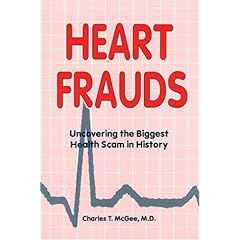
Heart Frauds

I decided I needed to read Heart Frauds, Uncovering the Biggest Health Scam in History by Charles T. McGee, M.D. after reading an excerpt of it online at books.google.com.

I had seen a dramatic picture of two rats, one fed with eggs and one fed with egg substitutes, and wanted to find the original source of that picture. It turned up in Heart Frauds, but I didn't feel like reading it on my computer. So I got the book through interlibrary loan.

Heart Frauds is a very interesting book. Dr. McGee attacks accepted medical practices aggressively - taking on the by-pass surgery (known as 'cabbages'), angiograms, angioplasties, even the theory that high cholesterol leads to heart disease. He examines medical studies, the history of these procedures and how they became accepted practices. He also presents alternative therapies and the studies which support, or are used to discredit, these therapies.

As I was reading the first part of this book, I kept thinking about the previously acceptable medical practice of letting blood and how now we know that practice was actually detrimental instead of helpful. I was more than a little surprised when McGee addressed blood letting, describing President George Washington's 'last battle' (pg 139-140). The point being that Washington was treated with the best medical care of his day, which we now know caused his death. McGee would say that the same is happening today - common medical practices for coronary heart disease are causing patients' deaths instead of helping them.

Dr. McGee argues that we've brought "arterial diseases upon ourselves through a combination of poor diets and lifestyles. However, it now has been proven to the satisfaction of the biggest skeptics in medicine that our arteries have the ability to heal and dissolve away fatty obstructions." (pg 96)

I found Chapter 13, "Reasonable Actions," the most practical chapter in the book - which makes sense because in it McGee discusses actions we can take now to prevent, manage, even heal heart disease.

He discusses foods we should eat (fresh, natural, minimally-processed foods, including eggs), and what foods we should avoid (refined and processed foods, especially vegetable oils, salad dressings, all margarines and anything that has been hydrogenated). It's in this section of the book that you'll find that dramatic picture of the rats. After seeing it, you'll never want to eat Egg Beaters. McGee also warns against the word natural.
"The word has no standardized meaning and is not regulated. Many processed foods are being advertised as being natural. According to common attitudes of the processed food industry, if an ingredient in one of their products was once a natural food, the end product can be called natural as well. Therefore we are told in advertisements that sugar and corn syrup are natural sweeteners because they come from cane and corn. In addtion, heat treated corn oil containing harmful trans fatty acids is advertised as being pure." (pg 164-165)


I find most of what McGee says in this book thought-provoking. However, McGee is a follower of Chinese medicine, which base their therapies on bring the body's energies back into balance. Fortunately, he only has a couple of sections in the book discussing these philosophies, which I think are more religious in nature than medical.

Bottom line: If you have heart disease, or a history of heart disease in your family, this book is worth reading. It's an eye-opening look at conventional medical practices, and will help you better evaluate your current lifestyle and any medical procedures you may eventually have to face.

Thursday, July 16, 2009

The Pleasure of Books

The boxes are waiting...
 

Opening the first box
 

Look at that beautiful binder!
 

Pulling out the books
 

I am unusual, I suppose. Most stories I hear about 'Sonlight Box Days' involve the children and the mom opening the boxes, oohing and ahhing over the books all together.

Me - I invite my friend Barb over for the momentous occasion. While my kids are gone, and someone's home to watch her son. It's just the two of us.

We oooh and ahh over the books as we go through the packing list. Wonder that yes, I will read all these books by next summer. She exclaims over books she's read about online, but hasn't seen in person. I get excited when I see titles I've always wanted to read, but haven't - like What Ever Happened to Penny Candy? - or when I see beloved books from my childhood - like Star of Light or King of the Wind.

We hole punch the stickers to help me, and the children, identify school books and take the time to painstakingly peel those backings off and stick them on the books.

I empty the shelves of last year's books - putting away Core 4 in a plastic container until the younger children are ready for it and packing Core 1 into the empty Sonlight box to take to a friend for her to use this year.

Opening the container with Core 2 is almost as exciting as pulling the brand-new Core 5 out of the Sonlight boxes. I comment on which books I loved most, pointing out to Barb which books she should read to her son this year, and telling her which books we will for sure be listening to instead of me reading aloud. (I love The Little Princess, but I cannot read it aloud. I have to listen to someone else read it.)

Two hours later, the books are on the shelves, complete with stickers. I've not put together the Instructor's Guide yet - still trying to figure out exactly how I want to organize it this year. But oh, did I savor the moments with the books. These books I will read aloud to my children, creating memories, learning things I never knew before. These books I'll read for the second time to my younger two - the books that are so delightful that my older two will happily sit and listen to them again.

Then, the children rush in. My niece is here this week and asks me, "Aunt Michelle, why are they acting like they've never seen these books before?"

"Well, Priscilla, because they haven't! At least for a long time."

My nine-year-old asks, "Hey Mom! Can I read A School Story? Please?"

"Yes, but please be sure to return it to the school shelf when you're done."

She finished it before bedtime. Her 11-year-old brother has already reread Amazing Bible Facts, and perused the shelf with his school books.

They're already asking, "When does school start?"

I'm itching to start too.

I love Sonlight because my kids love school. And so do I.
Posted by Picasa

Wednesday, July 15, 2009

The Unbreakable Child


Last week, I stayed up entirely too late reading this book. I went to bed late, and picked it up, thinking I would read for about ten minutes, then go to sleep.

Famous last words. Or thoughts.

Two hours later, I finished the book, with a tight throat and tears on my pillow. I've cried when I read books. I have never sobbed like I did when I read this one. Perhaps it was because I was over tired. Most likely, it was because my heart broke for the innocent little girl subjected to horrific abuse in the hands of nuns and priests, and the adult woman was now coming to grips with her past.

Kim Michele Richardson wrote this book after she had gone through a lawsuit against the Archdiocese and orphanage it managed. In the book, she goes back and forth between her child self and her adult self as she is forced to deal with childhood issues she had long since buried and tried to forget.

Throughout the whole book, one question haunts her, and for good reason. Who wears the face of God? Certainly not the nuns under whom she suffered so. Not the priest who molested her. Not the lawyer for the Archdiocese. Not the nun who accompanied him. I'm not sure she ever found the answer to her question. But that didn't stop her from asking it.

Kim is certainly an unbreakable child. The abuse didn't break her. But it broke her sisters, and countless other girls in the orphanage.

I commend Richardson for writing this book, exposing secrets she's wanted to forget, dealing with pain she'd rather ignore. I appreciate her vulnerability, and have learned from it.

Grandma's Story

Grandma’s always working, especially now that Grandpa’s recovering from knee replacement surgery. Our family went to Indiana this past weekend to help Grandma with things around the house, and to visit Grandpa in the hospital.


We had a good time, got work done and visiting in. One morning, Grandma and I found ourselves at the kitchen table with no children (amazing!) and had a little chat.


“Grandpa was very impressed with that green cream you put on his sore. It healed up nicely – do you know when it’ll be back in stock?” (Herbal Blend Multi-Purpose Cream: the first thing I pull out for nearly any skin-related issue. It should be back in stock July 24th.)


That question got us to talking Shaklee. Grandma started taking Shaklee about 2005, when I asked her to try it. Because she wanted to support me and my business, she did (bless you Grandma!).


Like many people, she thought it was pricey, and probably not worth it. This weekend, she told me that she’s noticed a difference. Others have too. Aunt Grace, a notoriously hard-worker, said, “You are looking good. It seems you have a lot more energy and stamina now.” I said, “Aunt Grace said that?” We were amazed! (Trust me, if you knew Aunt Grace, you would be too.)


As you can imagine, finances are tight for Grandpa & Grandma. Grandpa’s not able to work right now because of his knee replacement. He’s getting worker’s comp, but the budget’s been stripped down to bare essentials.


Grandma told me she saves her credit card’s cash-back bonuses to buy Shaklee, and any extra she can ‘throw that way,’ she does. She also takes half-doses: one Vita-Lea and B-Complex each day, a Sustained-Release C and Vita-E every other day.


It’s not ideal (ideal would be Vitalizer), but she’s making it work for her. And she’s noticing a difference, so she’s making choices so she can stay on her Shaklee vitamins.


Remember, the most expensive vitamins you buy are the ones that don’t work. Shaklee’s work – why waste money on something else? And Shaklee’s products are guaranteed too: satisfaction guaranteed or your money back.

Wednesday, July 08, 2009

Inside the Revolution

I first spotted this book on my Dad's coffee table. He was reading it. I asked him if it was good, and in his cryptic style he said, "It's taken me a long time to get through." Which I took to mean, 'yes.'

So, I picked it up from the library after he returned it. This is a hefty book, so it does take some time to get through it. It's worth reading all of it, because just reading part of it doesn't give you the whole picture.

Inside the Revolution is divided into three sections; Revolutionaries, Reformers, and Revivalists. The subtitle is "How the followers of Jihad, Jefferson & Jesus are Battling to Dominate the Middle East and Transform the World."

I found all the alliteration a bit over the top - but that is really a minor thing.

Joel C. Rosenberg, the author, based this book on hundreds of interviews (both on and off the record) and lots of research. He quotes Islamic leaders and Christian leaders, from the Qur'on and from the Bible. He profiles some of the major players in the Islamic world today - radicals, moderates and Christian leaders (although, for their protection, most of the later are given pseudonyms). All of this is supported by 23 pages of footnotes and five pages of recommended reading.

The first section, titled The Radicals, covers terrorists and would-be terrorists. The motto here is "Islam Is the Answer; Jihad Is the Way." Reading this section is eye-opening, and a bit scary. It helped me realize that there are sincerely evil people in this world, who justify their destructive means by their desired end result. Rosenberg clearly spells out why Iran should never get a nuclear weapon, and outlines the theology of the radical leaders - quoting from the Qur'on on and different religious leaders' speeches. He also delves into the world of al Qaeda and Hezbollah, and discusses the ongoing economic jihad which al Qaeda and Iran have been pursuing against the United States, complete with quotes and statistics. Like I said, it's scary.

Fortunately, in the rest of the book, Rosenberg introduces us to the other forces in the middle east, battling these radical Islamic leaders. In section two, Rosenberg introduces the reader to The Reformers who say, "Islam Is the Answer, Jihad is Not the Way." These Reformers are appalled by the Muslim-on-Muslim violence that the Radicals employ. They say Islam is a peaceful religion, and the Radicals are hijacking it for their own use. He outlines their theology, again including quotes from the Qur'on which support their interpretation.

He also introduces us to several of the leaders of this movement, including Hossein Khomeini (grandson of the Ayatollah Khomeini of Iran), Hamid Karzai (first democratically elected president of Afghanistan), Nouri Al-Maliki (prime minister of Iraq) and others. These leaders face death threats from the Radicals while trying to manage precarious positions - economically helping their people and at the same time working to stop terrorist activity in their own countries. Rosenberg is cautiously optimistic that these leaders can make a difference in the Middle East, and successfully fight the Radicals threatening to take over Islamic ideology.

In the third section, Rosenberg tells us about The Revivalists - those who say, "Islam Is Not the Answer, and Jihad is Not the Way; Jesus Is the Way." He profiles several high-profile, and not-so-high-profile, Muslims who have chosen Christianity over Islam. The transformations are amazing - and so are the numbers. Rosenberg details the Christian revival going on right now in radical and moderate Islamic nations. He also goes through the theology of the Revivalists, as he did with the Radicals and the Reformers, and discusses a bit of the Revivalists' strategy as well.

Rosenberg ends with a call for action. "Judeo-Christian civilization today faces the most dangerous moment in the history of the Islamic Revolution." (pg 489) He continues with:
"[F]ar too many in both the West and the East - political, military, and intelligence leaders as well as everyday citizens - are asleep to the gathering storm. In my (Rosenberg's) judgment, this lack of awareness poses the greatest danger of all. An intellectually honest, spiritually strong, morally courageous, politically united global alliance against the Radicals could be enormously successful. ... But should we succumb to the ignorance, apathy, callousness, hubris, and fear already so pervasive among many of our leaders, we will find ourselves facing cataclysms of biblical proportions that will make the attacks of September 11, 2001, pale by comparison." (pg 489)


Critics will say that Rosenberg is still living in the past, in the world immediately following September 11th. However, the Radicals are patient, and persistent. Their objective is clear, and our response is critical.

Monday, July 06, 2009

Protecting the Gift

Last summer, my sister was reading Gavin de Becker's book The Gift of Fear when we were on vacation. When she finished, I picked it up and read it. I found it helpful, and mentally put his next book Protecting the Gift on my 'to-read' list.

I finally remembered to pick it up from the library and read it. I found it very insightful, and helpful in thinking clearly about my children's safety. De Becker makes this point about making sure your children are safe in the first chapter: "[Y]ou can't be sure. There are, however, things you can be certain about. You can be certain every important decision is made with the best information. You can be certain you've educated yourself, certain you've made the best choice possible with the time and resources available. Above all, you can be certain you will listen to yourself, certain you'll give your hesitations a moment's consideration rather than later regret that you didn't." (pg 9)

De Becker walks his readers through strategies parents tend to use, like worry or overthinking, and encourages them to develop their intuition and act on it. Then he discusses circumstances in which children can be vulnerable.

I particularly appreciate his discussion of talking to strangers - instead of emphasizing "stranger danger," he recommends teaching your child to evaluate people with whom they come in contact. "Children raised to assume all strangers might be dangerous do not develop their own inherent skills of evaluating behavior. ... Fear of people is really the fear that we can't predict their behavior." (pg 83).

De Becker argues that we CAN predict violent behavior, and teaches us how in this book, and in The Gift of Fear.

Valuable points in Protecting the Gift include how to evaluate and interview potential babysitters, nannies, daycare centers, and schools. He also gives parents a letter template to send to the daycare center and/or school outlining expectations on how the parent and the administrators will work together to keep children safe.

De Becker also covers teaching teenage girls - and boys - how to protect themselves. He also encourages parents to step in, be unpopular, and make the right choices for their teenagers... and tells several stories to illustrate his point.

I appreciate the point he makes toward the end of the book about the importance of father's roles in children's lives - especially teenage boys. "[Nonviolence can be taught] and most effectively by fathers. Unfortunately, fathers are undervalued in America-virtually to the point of being an oppressed minority. That poses a problem for everyone, since the absence of a father in a boy's life is one of the predictors of future violence. ... While I've directed much of this book toward mothers, it is fathers who can most favorably influence a boy's behavior." (pg 239)

It was interesting read this book after reading Dr. Walt Larimore's book Bryson City Secrets. The combination taught me a lot about following my intuition and making hard decisions if I'm hesitant about leaving my children somewhere or with someone.

I said at the end of my post on The Bi-Polar Child that everyone who has contact with a child should read that book. I feel the same way about this book. Especially if you are a worrier, or tend to worry, you need to read this book. Worry is unproductive and can be detrimental to a child's safety. However, developing your evaluation skills and acknowledging your intuition not only can prevent you from being a victim, but your child as well.

Tuesday, June 30, 2009

Is Free Really Worth It?

I grew up in a bargain-hunting family. We bought what we needed at the best price possible. I’m still like that – which is why I choose Shaklee.

My friend, Harriet (she’s in on the right, I’m on the left), loves bargains, and Shaklee, too. I appreciate her perspective on choosing Shaklee – I’m sure my mother felt much the same way when she decided to switch our family to Shaklee products in 1975.
“It was a big step for me to buy my first bottle of Vita-Lea (Shaklee’s multi); I bought it only because IT CAME WITH A GUARANTEE -- feel better in 30 days or get all your money back. I was positive I would get my money back because I’d been taking C-----m (a store brand) for years and never felt any different. I had been taught in nurse’s training that all vitamins are the same so buy the least expensive.

You see, back in 1965 the U.S. Government said there was no difference between a synthetic substance and a natural substance. That is when vitamin companies could start making synthetic vitamins and still call them “natural”. Of course, it was cheaper to make synthetic vitamins. Even today a vitamin can be labeled 100% natural and contain only 10% natural ingredients. Today you can’t even recognize a good nutritional product because the industry isn’t regulated; it’s a buyer beware market.

Shaklee Corporation never made the shift to synthetic because of Dr. Shaklee’s philosophy—of producing vitamins in HARMONY with NATURE. Everything that goes into every Shaklee bottle is designed to make you healthier. Shaklee is different—it’s a company with integrity that you can trust.

After only a few days of taking Vita-Lea, I started feeling better with more energy. I got more done every day. It was worth it to me to buy Shaklee vitamins instead of the almost “fr.ee” ones because of how I felt. It’s been said that the most expensive supplements you can buy are the ones that don’t work and I believe it.”

So do I! Thanks Harriet, for sharing your experience. Today, Harriet and I both rely on Vitalizer for our daily energy boost and nutritional insurance. And it still comes with a guarantee – take it for 30 days, if you don’t feel better you’ll get your money back. Really, there’s nothing to lose.

What Would Google Do?

I picked up What Would Google Do? on the recommendation of the author of a couple of other books I've read and enjoyed. I thought the title was hokey (playing off the What Would Jesus Do? phenomena from several years ago), yet somewhat intriguing. What would Google do? And where exactly would they do it?

Jeff Jarvis, the author, walks the reader through how Google has not just changed the internet, but how people think and their expectations. He forces his readers to consider how this affects them, and especially their businesses. It's such a complete paradigm shift (over-used phrase, but oh-so-appropriate here), I'm still trying to digest it.

Some of Jarvis' challenges to the readers:
"What business are you really in?" (pg 80-81)

"I do believe that if companies were to ask themselves - and employees were empowered to ask - whether they were being good or evil to their customers and communities, they would often make different decisions." (pg 101)

"Google is seeing problems, solving them, and finding opportunities in them by thinking in new ways. This is all about finding your own new worldview." (pg 122)


Fortunately for us, Jarvis takes the second half of his book to apply the principles from the first half to business as we know it. He tackles media, advertising, utilities, manufacturing - a whole host of traditional industries which seem un-Google-able, if that is a word, and Googlifies them. It really is fascinating reading - probably made all the more fascinating if you were involved in such an industry.

One of my favorite parts of the book is the chapter titled "Google Power & Light: What Google Would Do." Google.org (the philanthropic arm) is actually involved in trying to reinvent our energy economy. It makes sense really. "If Google can help create cleaner, cheaper electricity anywhere it operates, it will improve its own bottom line." (pg 162)

Jarvis tells about his experience attending the World Economic Forum in 2008 and listening to Bono and Al Gore passionately plead for their core causes. Then he went to hear the Google.org forum.

"The contrast was stark. To summarize if not oversimplify their vantage points: Where Gore demands taxes and regulation, the Google team proposes invention and investment. Gore and company want to raise the cost of carbon - the cost of polluting - whereas the Google team wants to lower the cost of energy. ...

[W]e see different worldviews at work. "You can't succeed just out of conservation because then you won't have economic development," [Google.org executive director Larry] Brilliant said. "Find a way to make electricity - not to cut back on it but to have more of it than you ever dreamed of." ... Create and manage abundance rather than control scarcity - as ever, that is the Google worldview." (pg 163)


Jarvis goes on to contrast those two worldviews - create abundance vs. control scarcity. It reminds me of Paul Zane Pilzer's books - he writes based upon the same idea of creating abundance, though it's been so long since I've read his books I can't pinpoint exact quotes. Honestly, it brings to mind John 10:10 where Jesus says, "I came that they may have life and have it abundantly." That brings in a whole different discussion that I won't touch right now.

After I was finished with this book, my husband spotted it and asked me about it. I told him I'm still thinking about it, trying to digest it. He said, "Should we own this book? Should I read it?"

"Absolutely," I said.

I can't wait to get my own copy and start marking it up.